

COMPUTER ENGINEERING
- Menu
About Department
In a diploma program, the computer department focuses on providing students with a strong foundation in various aspects of computer science and engineering. The curriculum typically encompasses both theoretical knowledge and practical, hands-on experience, preparing students for diverse roles in the rapidly evolving IT industry.
Key Areas of Study
- Computer Fundamentals: Introduction to the basics of computer hardware, software, operating systems, and networking.
- Programming & Software Development: Learning programming languages like C, C++, Java, and Python, along with data structures and algorithms essential for software development.
- Database Management Systems (DBMS): Understanding database architecture, management, and security, including learning SQL and relational databases.
- Computer Networks: Exploring network topologies, protocols (like TCP/IP), internet architecture, and network security.
- Web Development: Learning front-end and back-end development using technologies like HTML, CSS, JavaScript, and frameworks like React or Angular.
- Software Engineering: Covering the software development lifecycle, methodologies like Agile, and tools used in software design and construction.
- Cybersecurity: Introduction to network security, cryptography, and ethical hacking techniques to protect systems and data.
- Specializations: Some programs may offer elective courses in areas like Artificial Intelligence (AI), Machine Learning (ML), Cloud Computing, or Mobile Application Development.
Benefits of Pursuing A Diploma In Computer Engineering
- Early Career Start: Provides a quicker path to entering the workforce compared to a full undergraduate degree.
- Industry-Relevant Skills: Focuses on practical skills and hands-on experience, making graduates job-ready.
- Cost-Effectiveness: Generally a more affordable option compared to longer degree programs.
- High Demand: The ever-growing IT sector creates a high demand for skilled computer professionals.
- Further Education Opportunities: Serves as a foundation for pursuing higher education, such as a B.Tech degree via lateral entry.

Vision
To produce competent technical manpower in Computer Science Engineering for fulfilling needs of industry and society

Mission
1.To impart need based technical education in Computer Science Engineering.
2.To modernize departmental laboratories and facilities.
3.To train faculty and staff , to meet challenges in a socio-technical environment.
4.To inculcate values and ethics among students.
Program Educational Objectives (PEOs)
The Program Educational Objectives (PEOs) of the Department of Computer Engineering are given below:
- Provide socially responsible, environment friendly broad based solutions to Computer engineering related broad-based problems adapting professional ethics.
- Adapt state-of-the-art Computer engineering broad-based technologies to work in multidisciplinary work environments.
- Solve broad-based problems individually and as a team member communicating effectively in the world of work.
Program Outcomes (POs)
- Basic and Discipline specific knowledge: Apply knowledge of basic mathematics, sciences and engineering specialization to solve the Computer engineering problems.
- Problem analysis: Identify and analyse well-defined Computer engineering problems and assist with the design of systems components or processes to meet specified needs.
- Design/ development of solutions: Design solutions for well-defined Computer Engineering technical problems and assist with the design of systems components or processes to meet specified needs.
- Engineering Tools, Experimentation and Testing : Apply modern Computer engineering tools and appropriate technique to conduct standard tests and measurements.
- Engineering practices for society, sustainability and environment: Apply appropriate Computer Engineering technology in context of society, sustainability, environment and ethical practices.
- Project Management: Use Computer engineering management principles individually, as a team member or a leader to manage projects and effectively communicate about well-defined engineering activities.
- Life-long learning: Ability to analyse individual needs and engage in updating in the context of Computer engineering technological changes.
Program Specific Outcomes (PSOs)
- Computer software and hardware usage: Use state-of-art technologies of computer software and hardware static electrical equipment.
- Computer Engineering Maintenance: Maintain state-of-the-art computer engineering systems and peripherals
Teaching and Non-Teaching Staff
Sr.No | Name of the faculty | Designation | Qualification | Experience | Faculty Profile | |
1 | Mr. M.P. Ganorkar | Lecturer Selection Grade (In-charge HOD ) | M.E. | 28 | ganorkarmohan@rediffmail.com | View |
2 | Mr. S. U. Rathod | Lecturer Selection Grade | M.E. | 26 | sunilrathodin@yahoo.com | View |
3 | Mr. H.P . Gathode | Lecturer | BE | 16 | hp_gathode@rediffmail.com | View |
4 | Mr. P. U. Malve | Lecturer Senior Scale | M.E. | 16 | pravin.malve29@gmail.com | View |
5 | Mr. M. R. Torney | Lecturer | M.E. | 16 | monaltorney@gmail.com | View |
6 | Mrs. S. G. Dhoke | Lecturer | M.E. | 13 | swatidhoke07@gmail.com | View |
Supporting Staff
Sr.No | Name of the faculty | Designation | Qualification |
1 | Mr. S. A.Tarkase | Instructor(TLA) | BE |
Admission Details
(Click on above links to view the list.)
Laboratories
Sr. No | Name of Laboratory | Lab In-charge( Faculty) | Lab Utilization (Hours per week) | Major Equipment’s | Approx. cost of one equipment in rupees |
1 | Hardware Lab | M. P. Ganorkar | 10 | 1) PC Trainer Kit 2) Desktop Lenovo PC-9 3) Router-1 | NA |
2 | Networking Lab | Mr. P. U. Malve | 10 | Total 19 computers 1. Desktop Computer HP – Model Desktop HP280G3 SFF Business PC 2.80 gigahertz Intel Core i5- 8400,Hard disk-1TB, 8GB RAM,Operating system – Window 10 Professional 2. Desktop Computer Dell- Model Desktop Dell Vostro 3470 3.60 gigahertz Intel Core i3- 8100,Hard disk-1TB, 4GB RAM,Operating system – Window 10 Professional 3. Desktop Computer Dell-01 Model Desktop Dell OptiPlex5400 AIO 2000 Mhz Intel Core i5- 12500T,Hard disk-1.5TB, 8GB RAM,Operating system – Window 11 Professional7 | NA |
3 | Database and Project Lab | M. R. Torney | 10 | 1) Personal Computers (dell and HP)-20 with Windows 10 2) MS Office 2016 3) Antivirus Software-Online Protection with Firewall securities 4) Ethernet Switch 5) Python 3.11.2 6) Pycharm IDLE 7) ORACLE 10 G | NA |
4 | Software Testing Lab | H. P. Gathode | 12 | 1) Lenevo Computers-20, 2) MS Office 2010, 3) Antivirus Software-Online Protection with Firewall securities, 4) Client Machines with Windows 7,Unix Client Software | NA |
5 | Programming Lab | S. G. Dhoke | 12 | 1) Personal Computer-HP make with Intel core i5 @ 2.80 GHz, 8 GB RAM and 500 GB HDD and Windows 10 2) Samsung Printer 3) Ethernet Switch 4) Canon scanner | NA |
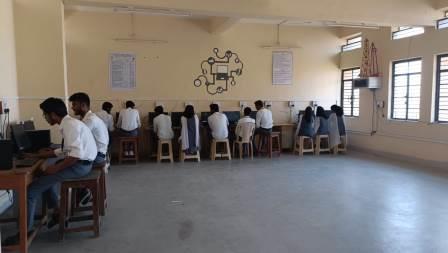
Programming Laboratory
| Faculty In-charge | Mr. H.N. Ranotkar |
| Lab In-charge | Mr. Prafull Dambhare |
| Area of Lab | 8.92 X 7.5 = 66.9 sq.m |
Lab Photos

Awards and Achievements
Sr. No. | Name of Awards & Achievements | Description | Date/Year |
1 | NBA | Got NBA FOR 3 YEARS | 2023 |
MOU’s with Industry
Sr.No | Name Of Industry/organization | Date of MOU’S | Key areas of MOU |
1 | Sumago Infotech Pvt Ltd, Nashik | 24.02.2025 | Key areas include faculty and student development programs, sponsoring projects, providing internships and industrial training, offering technical guidance for lab development, and sharing industry-oriented knowledge. These MOUs aim to bridge the gap between academia and industry, enabling students to meet global industry standards.
|